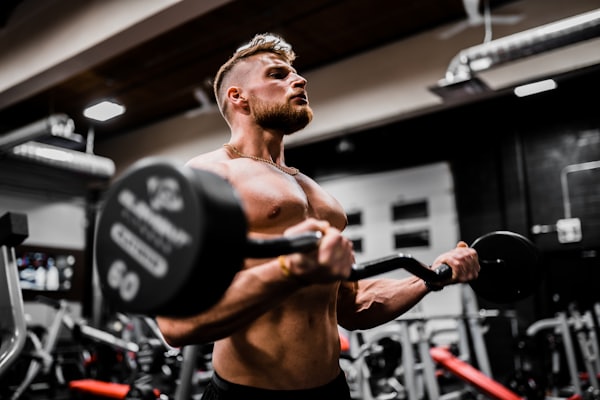
Barbell Back Squat
The barbell back squat is a compound movement that primarily targets the quadriceps, glutes and hamstrings. It also engages the core and lower back muscles as stabilisers.
How to Perform
Position the barbell across the upper back (not on the neck). Stand with feet shoulder-width apart, toes slightly turned out. Brace the core, then lower the hips back and down as if sitting into a chair. Aim for thighs parallel to the floor or slightly below. Drive through the heels to return to standing.
| Detail | Information |
|---|---|
| Primary muscles | Quadriceps, glutes, hamstrings |
| Secondary muscles | Core, lower back, calves |
| Difficulty | Intermediate |
| Equipment | Barbell, squat rack |
Safety Considerations
Keep the back neutral throughout the movement — avoid rounding. Start with a light weight or bodyweight to learn correct form. Use safety bars or a spotter when lifting heavier loads. If you experience knee or lower back pain, stop and seek professional advice.

Forearm Plank
The forearm plank is an isometric exercise that strengthens the core musculature, including the transverse abdominis, rectus abdominis and obliques. It also engages the shoulders and lower back.
How to Perform
Position your forearms on the floor with elbows directly under the shoulders. Extend legs behind you, resting on the balls of your feet. Maintain a straight line from head to heels — avoid sagging the hips or raising them too high. Hold the position while breathing steadily.
| Detail | Information |
|---|---|
| Primary muscles | Core (transverse abdominis, rectus abdominis) |
| Secondary muscles | Shoulders, lower back, glutes |
| Difficulty | Beginner to Intermediate |
| Equipment | None (exercise mat optional) |
Safety Considerations
Do not hold your breath — maintain steady breathing throughout. Start with shorter holds (15–20 seconds) and gradually increase. If you experience lower back pain, try the modified version on your knees. Ensure wrists and elbows are properly aligned.

Interval Walking/Running
Interval training alternates between periods of higher-intensity effort and lower-intensity recovery. This format may help improve cardiovascular fitness more efficiently than steady-state exercise, though individual responses vary.
How to Perform
Begin with a 5-minute warm-up walk. Alternate between 1 minute of brisk walking or light jogging and 2 minutes of moderate walking. Repeat for 20–30 minutes. Finish with a 5-minute cool-down walk. As fitness improves, you can adjust the ratio of work to rest periods.
| Detail | Information |
|---|---|
| Primary benefit | Cardiovascular endurance |
| Secondary benefit | Lower body muscular endurance |
| Difficulty | Beginner |
| Equipment | Supportive footwear |
Safety Considerations
Wear appropriate footwear with adequate cushioning and support. Choose a level, well-lit route. Stay hydrated, especially in warm Australian climates. If you feel dizziness, chest tightness or unusual shortness of breath, stop and seek medical attention.